RTL Design vs Design Verification: Which VLSI Career Success Path Is Right for You? 2026
RTL Design vs Design Verification.
Introduction
One of the most common questions among ECE students and aspiring VLSI professionals is:
“Should I choose RTL Design or Design Verification?”
Both career paths play critical roles in semiconductor development and offer excellent growth opportunities. However, the required skills, daily responsibilities, and career progression differ significantly.
This article compares RTL Design and Verification to help you make an informed career decision.
What Does an RTL Design Engineer Do?
RTL Design vs Design Verification: Which VLSI Career Path Is Right for You?
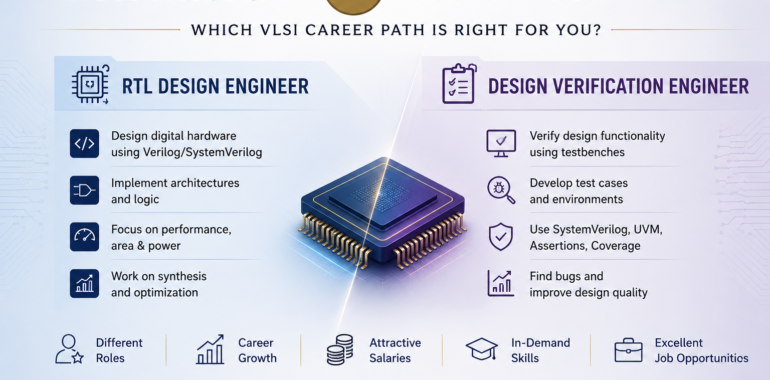
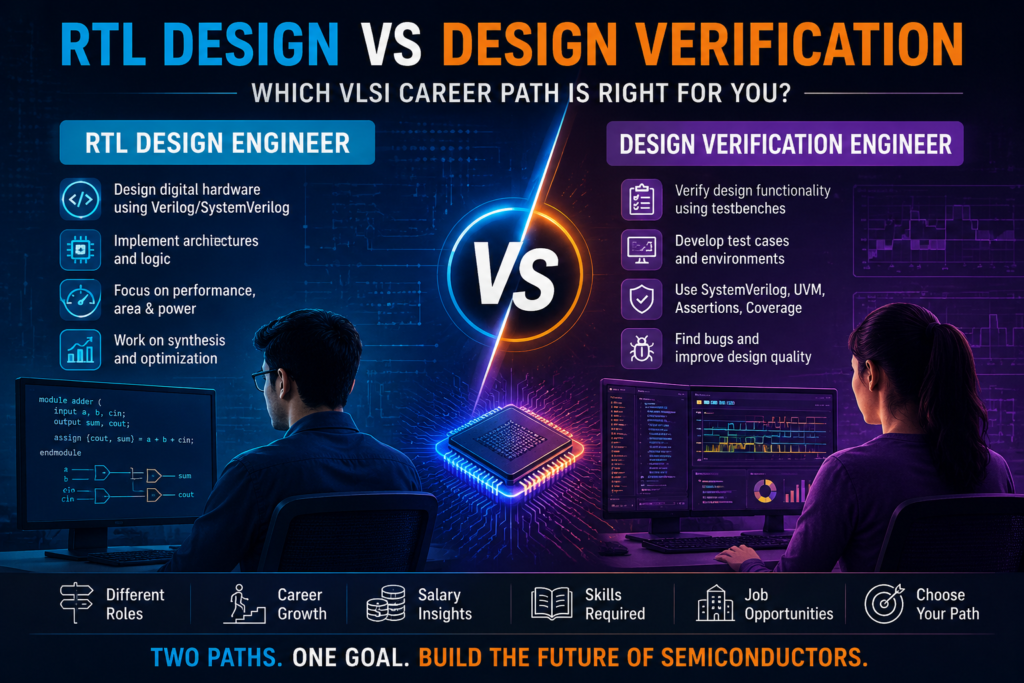
RTL Design Engineers convert architectural specifications into synthesizable hardware designs.
Their primary goal is to create efficient digital circuits using Verilog or SystemVerilog.
Typical responsibilities include:
- RTL coding
- FSM implementation
- Design optimization
- Power and area improvements
- Synthesis support
- Design reviews
Skills Required
- Digital Electronics
- Computer Architecture
- Verilog
- SystemVerilog
- Synthesis Concepts
- Timing Analysis Basics
Ideal For
Engineers who enjoy:
- Hardware architecture
- Problem solving
- Circuit implementation
- Logic optimization
What Does a Design Verification Engineer Do?
Verification Engineers validate whether the RTL design behaves according to specifications.
Their goal is to identify bugs before chip fabrication.
Typical responsibilities include:
- Testbench development
- Functional verification
- UVM implementation
- Coverage closure
- Assertions
- Debugging failures
Skills Required
- Digital Electronics
- SystemVerilog
- Object-Oriented Programming
- UVM Methodology
- Assertions
- Functional Coverage
Ideal For
Engineers who enjoy:
- Debugging
- Software-style programming
- Test automation
- Problem investigation
RTL Design vs Verification: Key Differences
(RTL Design vs Design Verification)
Coding Style
RTL Design:
- Hardware-centric coding
- Synthesizable RTL
Verification:
- Testbench development
- Object-oriented programming
Learning Curve
RTL Design:
- Strong digital design fundamentals required
Verification:
- Requires learning SystemVerilog OOP and UVM
Job Availability
Historically, verification teams are larger than design teams.
As a result, there are often more openings available in Design Verification compared to RTL Design.
Career Growth
RTL Design Path:
RTL Engineer → Senior RTL Engineer → Lead Designer → Architect
Verification Path:
Verification Engineer → Senior Verification Engineer → Verification Lead → Verification Manager
Which Domain Has Better Opportunities in 2026?
Both domains are expected to grow rapidly due to increasing semiconductor demand.
Choose RTL Design if you enjoy:
- Hardware implementation
- Logic design
- Architecture development
Choose Verification if you enjoy:
- Debugging
- Programming concepts
- Test automation
- Finding design bugs
Can You Transition Between Domains?
Yes.
Many engineers start in Verification and later move into Design roles. Similarly, RTL engineers often gain verification experience while working on projects.
Having knowledge of both domains significantly increases career flexibility.
Recommended Learning Roadmap
For RTL Design
- Digital Electronics
- Verilog
- SystemVerilog
- FSM Design
- Synthesis Concepts
- RTL Projects
For Verification
- Digital Electronics
- Verilog
- SystemVerilog
- OOP Concepts
- Assertions
- UVM
- Verification Projects
Conclusion
There is no universally better choice between RTL Design and Design Verification. The right path depends on your interests, strengths, and long-term goals.
If you enjoy creating hardware, RTL Design may be the ideal fit. If you enjoy debugging, automation, and verification methodologies, Verification can offer an exciting and rewarding career.
Regardless of the path you choose, building strong fundamentals and gaining hands-on project experience are the keys to success in the semiconductor industry.
Frequently Asked Questions (FAQs)
1. What is the difference between an RTL Design Engineer and a Design Verification Engineer?
An RTL Design Engineer is responsible for creating digital hardware designs using Verilog or SystemVerilog based on design specifications. A Design Verification Engineer validates those designs by developing testbenches, running simulations, and identifying functional bugs before chip fabrication.
2. Which is better: RTL Design or Design Verification?
Neither role is universally better. RTL Design is ideal for engineers interested in hardware architecture and digital circuit implementation, while Design Verification is better suited for those who enjoy debugging, testing, and automation. The best choice depends on your interests and career goals.
3. Is Design Verification easier than RTL Design?
Both domains have unique challenges. RTL Design requires strong digital design and hardware implementation skills, whereas Design Verification involves advanced SystemVerilog, UVM, debugging, and verification methodologies. Success in either domain requires continuous learning and practice.
4. Which field has more job opportunities: RTL Design or Verification?
Generally, Design Verification teams are larger than RTL Design teams in many semiconductor companies. As a result, there are often more openings available for Verification Engineers, especially those skilled in SystemVerilog and UVM.
5. What skills are required to become an RTL Design Engineer?
To become an RTL Design Engineer, you should have a strong understanding of Digital Electronics, Verilog, SystemVerilog, FSM design, computer architecture, synthesis concepts, and ASIC design flow. Hands-on RTL projects can significantly improve your job prospects.
6. What skills are required to become a Design Verification Engineer?
(RTL Design vs Design Verification)
Design Verification Engineers typically need expertise in Digital Electronics, SystemVerilog, Object-Oriented Programming (OOP), UVM methodology, assertions, functional coverage, and debugging complex simulation issues.
7. Can a Verification Engineer switch to RTL Design later?
Yes. Many engineers transition between verification and design roles during their careers. Having a solid understanding of RTL coding, digital design concepts, and ASIC development flow can make the transition smoother.
8. Which role offers a higher salary: RTL Design Engineer or Design Verification Engineer?
Salaries vary depending on experience, company, location, and skill level. In most semiconductor companies, both RTL Design Engineers and Design Verification Engineers receive competitive compensation, with advanced expertise often having a greater impact on salary than the specific role itself.
9. Should freshers choose RTL Design or Design Verification?
Freshers should choose the domain that aligns with their strengths and interests. If you enjoy hardware implementation and logic design, RTL Design may be the right fit. If you enjoy debugging, verification methodologies, and software-oriented workflows, Design Verification may be a better choice.
10. How can I start a career in RTL Design or Design Verification? (RTL Design vs Design Verification)
Start by building strong fundamentals in Digital Electronics and Verilog. Then learn SystemVerilog, work on practical projects, understand the ASIC design flow, and gain hands-on experience through industry-oriented training programs. Consistent practice and project work are essential for securing your first VLSI job.
- What is VLSI ?
- https://youtu.be/a-Avlhu1iC8?si=4Hz6IR43U4UPjiib